
Dr. Florence van Tienen
- Role: Assistent Professor
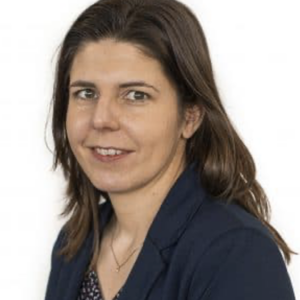
I am an assistant professor at the Department of Translational Genomics, School for Mental Health and Neurosciences (MHeNS) at Maastricht University. My research focusses on development of a cell therapy to combat myopathy in patients with a mitochondrial DNA (mtDNA) mutation.
The complexity of mitochondria and the wide range of diseases associated with mitochondrial dysfunction triggered my interest already at the beginning of my academic career. During my PhD, I studied the role of mitochondrial (dys)function in skeletal muscle of patients with type 2 diabetes and people with diabetes due to a mtDNA mutation. After completing my PhD in 2011, I started working at the Clinical Genetics department of the MUMC+, where I combined diagnostic genetic analyses of inherited cardiac diseases with research. My research focused on preclinical analysis of mesoangioblasts of patients with a mtDNA mutation in order to develop a potential cell therapy to combat their myopathy. To this end, I performed part of my research in 2014 at the laboratory of mesoangioblast expert Prof. Sampaolesi at KU Leuven (BE). In 2019, I was appointed as assistant professor at Maastricht University and continued my research on the development of an autologous mesoangioblast therapy, moving from preclinical to clinical studies. I have established a GMP- and GCP-compliant protocol for culturing mesoangioblasts in close collaboration with Leiden UMC and CHU Liege and am coordinating the clinical trials (clinicaltrials.gov NCT05962333 and NCT05199740).
A first-in-human phase I/II trial was conducted in carriers of the m.3243A>G mutation, and a phase IIa trial is now underway to assess the safety and efficacy of repeated mesoangioblast administrations (NCT05962333). Preclinical studies aim to enable treatment for all mtDNA mutation carriers and to further improve the mesoangioblast cell product for clinical application.
More information: www.generateyourmuscle.com.
Research lines
Development of mesoangioblast (MABs) cell therapy to combat mitochondrial myopathy
Summary: Myopathy and exercise intolerance affect over half of patients with a heteroplasmic mitochondrial DNA (mtDNA) mutation and are reported by them to have the greatest impact on quality of life. Yet no effective treatments exist. To address this unmet need, we are performing clinical trials using patients’ own healthy myogenic stem cells, called mesoangioblasts, to compensate the genetic defect in the affected muscle fibres and generate new, healthy fibres. The past years, we demonstrated that mtDNA-mutation free mesoangioblasts (MABs) can be cultured from half of the mtDNA mutation carriers and we performed the first-in-human phase I/II clinical application of autologous mesoangioblasts in carriers of the m.3243A>G mutation. Currently, we are performing a phase IIa trial to assess efficacy and safety of three mesoangioblast administrations in the arm of patients with myopathy due to the m.3243A>G mitochondrial mutation (NCT05962333 clinicaltrials.gov).
In addition, preclinical research focusses on developing strategies to enable inclusion of all heteroplasmic mtDNA mutation carriers and on improving the MABs medicinal cell product for clinical application.
Research Center: Maastricht UMC+
Diseases: Mitochondrial Myopathy
Experts involved: Janneke Hoeijmakers (MD-PhD), Bert Smeets (PhD), Rene de Coo (MD-PhD)