
Dr. Pietro Spitali
- Role: Assistant Professor
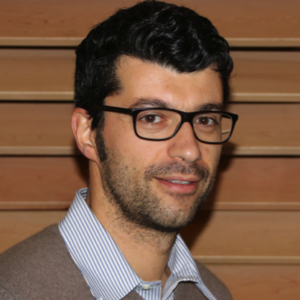
Pietro Spitali is currently assistant professor at the Human Genetics Department of the Leiden University Medical Center. He has worked in the field of muscular dystrophies and especially Duchenne muscular dystrophy (DMD) since 2003. His graduate work focused on the pre-clinical development of antisense oligonucleotides mediated exon skipping in DMD. After obtaining his PhD in Ferrara in 2010 he moved to the DMD genetic therapy group headed by Dr. Annemieke Aartsma-Rus at the Leiden University Medical Center in the Netherlands, first as post-doc researcher and since 2014 as assistant professor. His work focuses on the identification of biomarkers in patients affected by muscular dystrophies and especially Duchenne. This involves single and multi-omics studies on several sample matrices in muscle, blood and urine as well as mechanistic studies on the RNA processing in muscle diseases.
Pietro has authored 30 publications and 2 book chapters. He has obtained research grant funding from amongst others the Prinses Beatrix Spierfonds, the Association Française contre les Myopathies (AFM) and the Dutch Duchenne Parent Project. He was involved in the FP7 funded Bio-NMD, SCOPE-DMD and NeurOmics projects. He coordinates an AFM funded consortium to identify biomarkers in patients affected by several forms of muscular dystrophy. He has been a member of COST Action BM1207 (www.exonskipping.eu); he recently organized and coordinated a workshop for this Action on the harmonization of exon skipping quantification across laboratories. Pietro is an active reviewer for prestigious journals and funding agencies.
Research lines Pietro Spitali
I am associate professor at the Human Genetics Department of the Leiden University Medical Center (LUMC). At the local level I am member of the Scientific Committee of the Human Genetics department and ambassador of the LUMC Neuroscience theme. At the international levels I am board member of the Neuromuscular Disease Advisory Committee of TREAT-NMD, member the MD-UK Medical Research Committee and I co-chair the Fluid Biomarker workgroup of the D-RSC consortium of C-PATH.
My research group focuses on understanding neuromuscular conditions using biomarkers.
After obtaining my PhD in 2010 at the University of Ferrara (Italy), I moved to the lab of Prof. Annemieke Aartsma-Rus to participate in the preclinical development of exon skipping approaches for Duchenne muscular dystrophy (DMD). I realized that advancing drug development requires objective measures capable of demonstrating meaningful clinical benefit. I therefore started to study muscle and blood biomarkers in patients affected by different neuromuscular conditions such as DMD, BMD, LGMD, FSHD, and IBM. I complemented the clinical work with pre-clinical experiments to better understand the meaning of the clinical observations. Therefore our lab has a strong translational focus.
Research Line 1: Spatial Biology of neuromuscular conditions
Summary: We use spatial technologies such as spatial transcriptomics on histological sections to understand what cells and genes drive disease progression. With these techniques we can link biomarkers signatures to changes in tissue morphology (e.g. fibrosis) and understand the molecular events leading to tissue lesions. This work is funded by the AFM Telethon, The Prinses Beatrix Spierfonds and the LUMC.
Research Center: Leiden UMC, Human Genetic
Diseases: DMD, BMD, LGMD, FSHD and IBM.
Experts involved: Sandra de Haan (Post-doc Researcher); Laura Heezen (PhD-student), Qirong Mao (PhD-student), Makeda Moore (PhD-student).
Research line 2: Blood biomarkers in neuromuscular conditions
Summary: We use a multidisciplinary approach to identify and validate molecular biomarkers in patients’ blood samples and back up the obtained results with data obtained in animal models. We make us of genomics, transcriptomics, proteomics and metabolomic platforms to identify molecular signatures in body fluids to describe disease progression in longitudinal studies and predict clinically meaningful milestones. This work includes development of quantitative lab methods, statistical modeling and omics data integration. The work is funded the Duchenne Parent Project, Parent Project Muscular Dystrophy, NIH, EU as well as companies such as Edgewise Therapeutics.
Research Center: Leiden UMC, Human Genetics
Diseases: DMD, BMD, LGMD, FSHD, IBM.
Experts involved: Nadine Ikelaar (MD, PhD-student), Esther Schrama, (MD, PhD-student), Chiara Degan (PhD student), Sharon de Vries (research technician), Makeda Moore (MD, PhD student).
Techniques/keywords: Biomarkers, Spatial Transcriptomics, Duchenne, Becker, Myositis, Limb-girdle.